Geometric Inconsistency Localization
in Multi-View Image Sets

2nd Deepfake Forensics Workshop (DFF) at ACM Multimedia, 2026
IDLab, Ghent University – imec
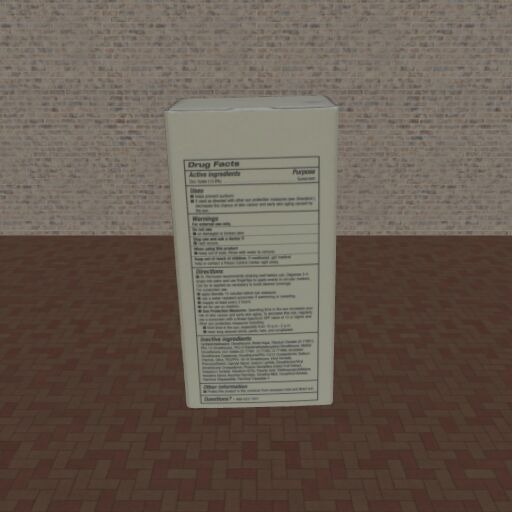
View 1
View 1 of the object
Geometrically
inconsistent
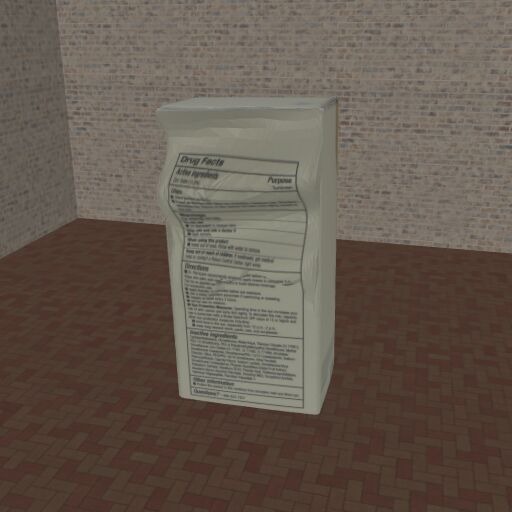
View 2
View 2 of the object, with a deformed region
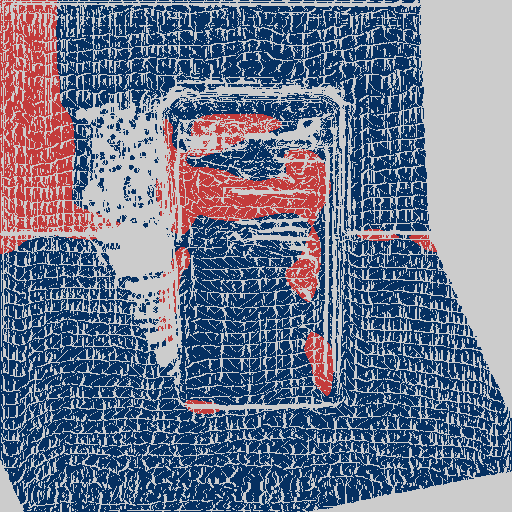
MEt3R
MEt3R response
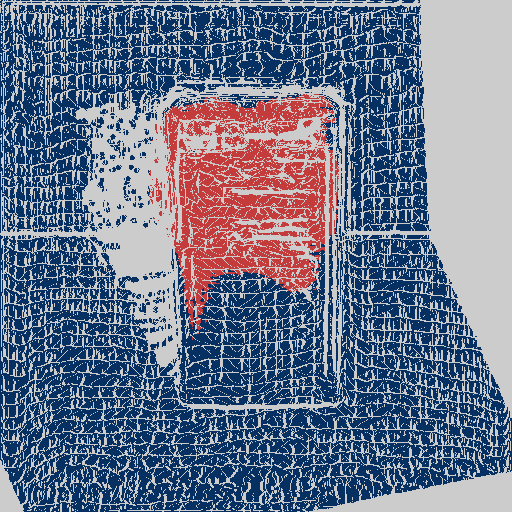
DEFECt3R (ours)
DEFECt3R prediction
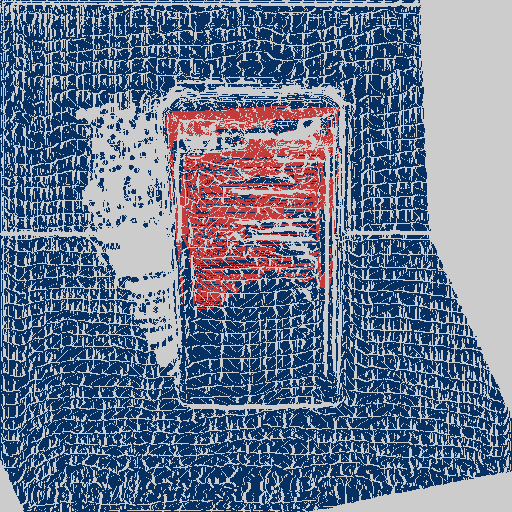
Ground truth
Ground-truth inconsistency mask

Two views of the same object look plausible in isolation, yet they are geometrically inconsistent with one another. Existing consistency methods such as MEt3R produce a global score and respond to large consistent regions. Our DEFECt3R directly localizes the inconsistency at the pixel level (red = inconsistent, blue = consistent).

TL;DR

Two views of a scene can each look real, yet contradict each other geometrically. We release DeformView, a wide-baseline multi-view dataset with pixel-level labels of such geometric inconsistencies, and propose DEFECt3R, a lightweight classifier that localizes them. Existing consistency metrics transfer poorly to this forensic task; DEFECt3R localizes inconsistencies better and drastically reduces false positives.

Full abstract

Novel view synthesis (NVS) models can produce realistic new views of the same scene from different viewpoints. However, these generated views are not always geometrically consistent with one another. Multi-view (MV) consistency has shown promise as a tool for evaluating these NVS models. Its potential for multimedia forensics, however, remains largely unexplored, particularly for localizing geometric inconsistencies across wide-baseline image pairs.

To enable research in this direction, we introduce DeformView, a wide-baseline MV dataset with pixel-level annotations of geometric inconsistencies. Using DeformView, we evaluate state-of-the-art MV consistency-scoring methods and show that approaches developed for NVS evaluation transfer poorly to the forensic task of geometric inconsistency localization.

To address this limitation, we propose DEFECt3R, a lightweight learning-based classifier that uses cross-view feature relationships to localize geometric inconsistencies at the pixel level. By learning from explicit supervision, including hard negatives from geometrically consistent yet deformed views, DEFECt3R improves localization performance and substantially reduces false positives compared to existing consistency-scoring methods. Ablation experiments further show that both feature representations and correspondence quality contribute to localization performance.

Overall, our findings demonstrate that MV geometric consistency is a promising yet underexplored signal for multimedia forensics and establish a benchmark and baseline for geometric inconsistency localization in wide-baseline MV image pairs.
Can geometric inconsistency expose
fake multi-view image sets?

Generative models can create realistic novel views of a scene, enabling fake multi-view image sets. However, keeping these views geometrically consistent is challenging: real photographs share one physical geometry, generative models are not constrained to it. This weakness can serve as a forensic signal, yet it remains largely unexplored, for two reasons.

Existing datasets fall short

No dataset combines:

  • Wide-baseline image pairs with large viewpoint changes,
  • pixel-level labels of where the views disagree, and
  • hard negativesHard negatives are pairs of two views of the same deformed object. They look unusual, but remain geometrically consistent across views. A good method should not flag them.: deformed, yet still consistent views.

Prior datasets annotate at object level, or warp each image independently, so the same deformation can never be seen consistently from two viewpoints.

Existing methods fall short

State-of-the-art methods either:

  • give only a global score with no localization (MEt3R),
  • rely on handcrafted epipolar rules and known poses (TSED), or
  • need small viewpoint changes, as in video (GeCo) or many views (3DCS).

They were designed to evaluate novel view synthesis, not to tell whether and where two views contradict each other.

Proposed dataset: DeformView

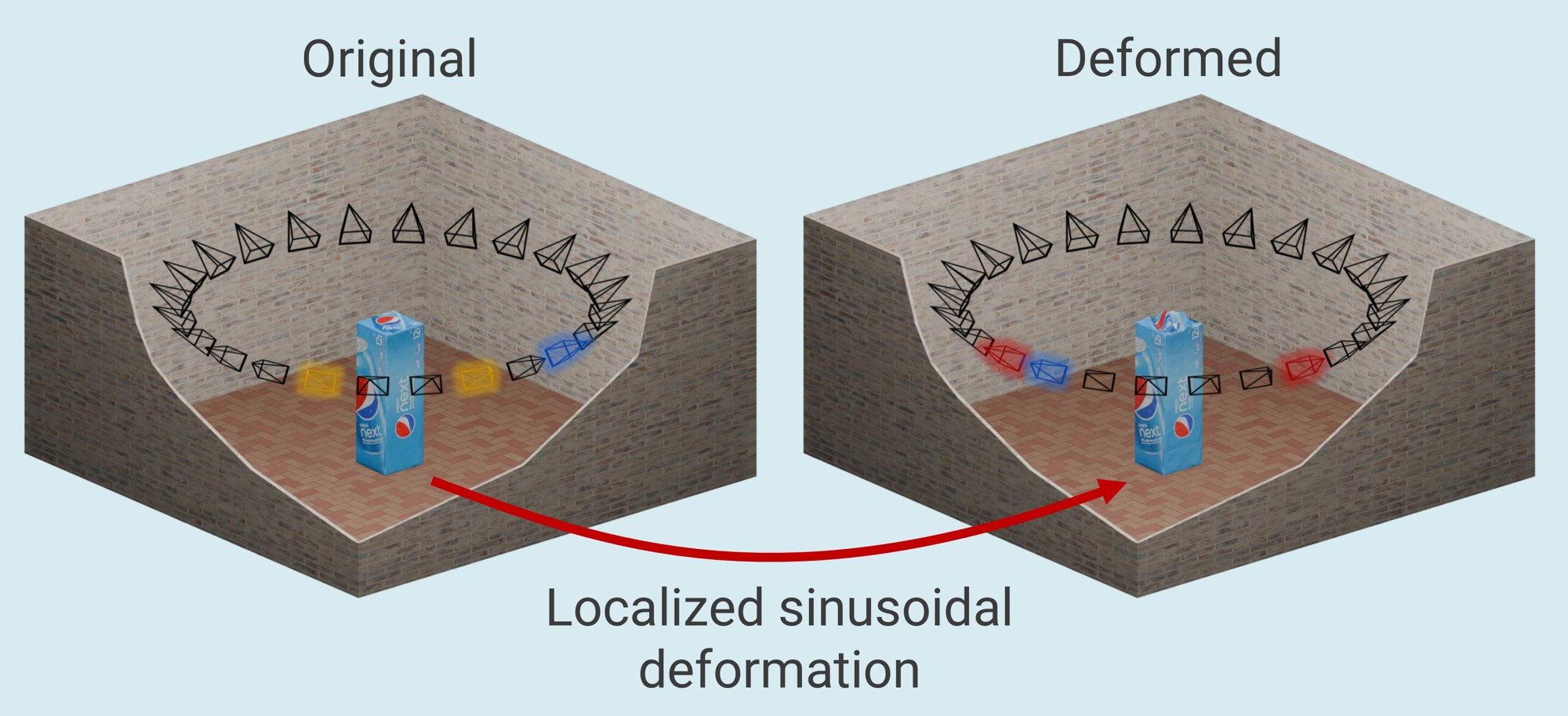
We apply a localized sinusoidal deformation directly to 3D object meshes from Google Scanned Objects, and render original and deformed meshes in a shared textured room. Because the deformation lives in 3D, it can be rendered consistently from any viewpoint, yielding exact pixel-level ground truth.

Original and deformed mesh in a textured room, surrounded by a ring of 24 cameras

Each object is rendered from a ring of 24 cameras around both the original and the deformed mesh. The highlighted cameras show one example of each pair type: blue = positive, yellow = negative, red = hard negative.

1,029
3D objects, each with an original & deformed mesh
24
viewpoints per object, spaced 15° apart
≤120°
viewpoint difference: a wide-baseline setting
8–16%
of mesh faces deformed, in one contiguous region

Three pair types

Positive
originaldeformed

One view of the original and one of the deformed mesh. The views are inconsistent exactly in the deformed region, given by the ground-truth mask.

Negative
originaloriginal

Two views of the original mesh. The pair is consistent and should produce no inconsistency response.

Hard negative
deformeddeformed

Two views of the same deformed mesh. Unusual geometry, yet consistent: methods must verify cross-view disagreement, not just spot deformations.

Split at object level into train (75%), validation (15%) and test (10%), so no object appears in more than one split.

Proposed method: DEFECt3R

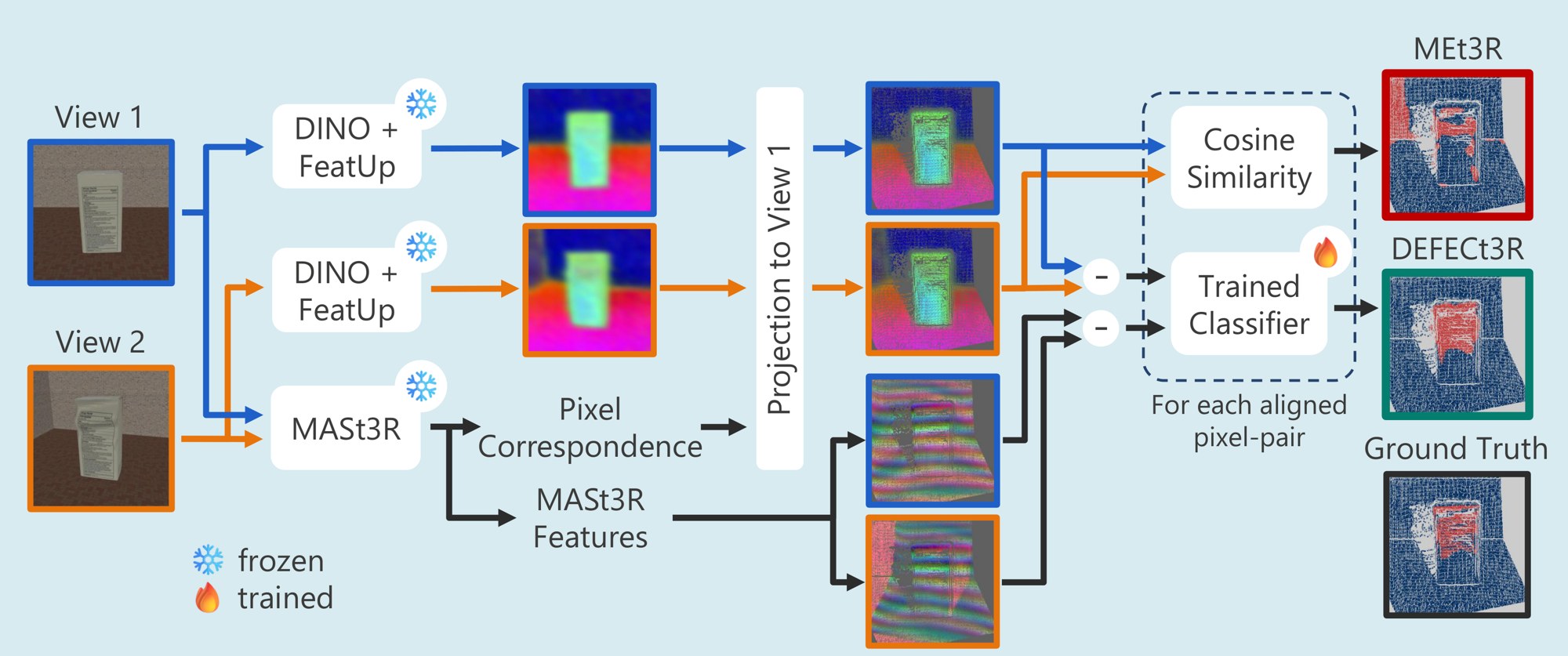
MEt3R treats the dissimilarity of aligned features as inconsistency. But features also differ for geometrically consistent deformations, or when a correspondence error compares unrelated regions. DEFECt3R therefore learns whether aligned DINO and MASt3R feature differences reflect a genuine geometric inconsistency.

Overview of DEFECt3R and its relation to MEt3R

Both views are encoded with DINO + FeatUp; MASt3R estimates pixel correspondences to project View 2 onto View 1. Where MEt3R takes the cosine similarity of the aligned features, DEFECt3R feeds the DINO and MASt3R feature differences into a small trained classifier. All backbones stay frozen.

A lightweight per-pixel classifier

For each aligned pixel pair we take the difference of the L2-normalized DINO features (384-d) and MASt3R features (24-d). The DINO difference is projected to 64-d (384→128→64), concatenated with the MASt3R difference, and a second MLP (88→64→1) predicts an inconsistency probability. Each pixel is classified independently, so no spatial aggregation is needed: the classifier has only ~63k trainable parameters.

Learning from hard negatives

The classifier is trained on DeformView with focal loss, using all foreground pixels and a 10% subsample of the background. Because the supervision includes hard negatives (deformed–deformed pairs), the model learns to separate true cross-view disagreement from visual deformation and from reprojection artifacts caused by correspondence errors.

Results

Consistency-scoring methods built for novel view synthesis (NVS) evaluation transfer poorly to forensic localization. DEFECt3R outperforms MEt3R and TSED at both the pixel and the pair level, while drastically reducing false positives.

Localization accuracy

More accurate inconsistency localization

AUCAUC: area under the ROC curve over all foreground pixels of the test set. It measures how well inconsistent pixels are ranked above consistent ones, independent of a threshold. 0.5 = chance. 0.60 → 0.76

Correspondence errors

Suppresses false positives from correspondence errors

FPRFalse-positive rate: the fraction of pixels flagged as inconsistent in pairs that are in fact fully consistent. Lower is better. 47% → 1.5%

original–original pairs

Visual deformations

Distinguishes visual deformations from inconsistencies

FPRFalse-positive rate inside the deformed region of deformed–deformed pairs: the region looks unusual, but is geometrically consistent. Lower is better. 61% → 1.5%

deformed regions

Visual comparison

Predictions on DeformView test pairs, shown from the perspective of View 1 (red = inconsistent, blue = consistent, yellow = object outline). Switch between MASt3R-estimated and ground-truth camera poses at any time, and hover Peek DINO only on a DEFECt3R prediction to compare it with the variant trained without MASt3R features.

View 1
View 2
Ground truth
MEt3R
DEFECt3R (ours) DINO + MASt3R features
Positive · original–deformed
Negative · original–original
Hard negative · deformed–deformed

With MASt3R poses, large viewpoint differences sometimes cause severely wrong correspondences, so unrelated object parts are compared. MEt3R flags these as inconsistent, while DEFECt3R is able to suppress many of them.

Pixel-level localization

Results on the DeformView test set, for all pairs and per pair type. Background pixels are excluded. For the all-negative pair types, the false-positive rate (FPR) is reported. Best and second best are marked.

MEt3R DEFECt3R (ours)
Features DINODINO DINO+MASt3RDINODINO
Poses MASt3RGT MASt3RMASt3RGT
All pairsAUC ↑0.5950.5950.7590.7320.809
F1 ↑0.0630.0510.1680.1450.207
Precision ↑0.0330.0270.1400.1090.184
Recall ↑0.6400.3900.2080.2180.238
PositiveAUC ↑0.5830.5710.6830.6610.723
F1 ↑0.1690.1330.2050.1970.235
Precision ↑0.0980.0800.2020.1800.232
Recall ↑0.6400.3900.2080.2180.238
Hard negativeFPR ↓ deformed0.6130.3450.0150.0160.017
FPR ↓ rest0.4880.2900.0200.0310.009
NegativeFPR ↓0.4700.2930.0150.0300.007

Recall is identical for all pairs and positive pairs, since positive pixels only occur in positive pairs. DEFECt3R is more conservative than MEt3R: lower recall, but higher precision. Both better correspondences and MASt3R features help, the former the most.

Pair-level detection

One decision per image pair: is it consistent or not? DEFECt3R's pixel scores are aggregated with the 99th percentile. TSED and MEt3R stay close to chance, independently of which aggregation or correspondences are used.

TSED MEt3R DEFECt3R (ours)
Features DINODINODINODINO DINO+MASt3RDINODINO
Aggregation MeanMean99th99th 99th99th99th
Poses MASt3RGT MASt3RGTMASt3RGT MASt3RMASt3RGT
AUC ↑0.4840.5200.5000.5160.5130.5160.7130.6790.737
F1 ↑0.4680.4860.4820.4800.4810.4780.5370.5280.558
Precision ↑0.3160.3250.3190.3170.3190.3140.3940.4040.510
Recall0.9040.9580.9920.9930.9770.9930.8430.7640.616

Recall is not highlighted: with AUCs near 0.5, the F1-optimal threshold of TSED and MEt3R simply flags almost every pair as inconsistent, leading to very high recalls.

Takeaways

  • Geometric inconsistency shows potential as a forensic signal.
  • DeformView enables training and evaluation of localization methods.
  • Correspondence quality remains a major bottleneck.

Citation

@inproceedings{10.1145/3840473.3840513,
    author    = {Staelens, Xander and Loos, Alb{\'e}ric and Ramlot, Bert and Mareen, Hannes and Lambert, Peter and Van Wallendael, Glenn},
    title     = {Geometric Inconsistency Localization in Multi-View Image Sets},
    year      = {2026},
    isbn      = {9798400729270},
    publisher = {Association for Computing Machinery},
    address   = {New York, NY, USA},
    url       = {https://doi.org/10.1145/3840473.3840513},
    doi       = {10.1145/3840473.3840513},
    booktitle = {Proceedings of the 2nd Deepfake Forensics Workshop: Detection, Attribution, Recognition, and Adversarial Challenges in the Era of AI-Generated Media (DFF '26 @ ACMMM 2026)},
    pages     = {68--75},
    numpages  = {8},
    location  = {Rio de Janeiro, Brazil},
    series    = {DFF '26}
}

Acknowledgments

This work was funded in part by IDLab (Ghent University – imec), by Flanders Innovation & Entrepreneurship (VLAIO), by Research Foundation – Flanders (FWO) (1SA9O26N & G0A2523N), and by the European Union. DeformView is built on Google Scanned Objects, and DEFECt3R builds on MEt3R, MASt3R, DINO and FeatUp.
This project page was adapted from the Nerfies project page.